 Your Best Pitch
A marketplace where both sides find each other and get paid.
A marketplace has two kinds of customer: the people who list something and the people who want it. The hard part is not the listings, it is the money, the accounts and the rules about who can see and change what. I have built one, I run it every day, and I can build yours.
What goes into one
Listings and search
Providers list what they offer, and customers search, filter and compare. Listings that are only a directory entry stay separate from ones you can book, so nobody books something that is not available.
Accounts for both sides
Each side has its own login and its own view. Providers manage their listings, customers see their bookings.
Payments that pay out
Customers pay on the site and the money goes to the provider through Stripe Connect.
An admin side for you
A back office where you see everything, handle refunds and disputes, and keep the platform in order.
This is part of my custom software work, which also covers client portals, B2B ordering and internal tools.
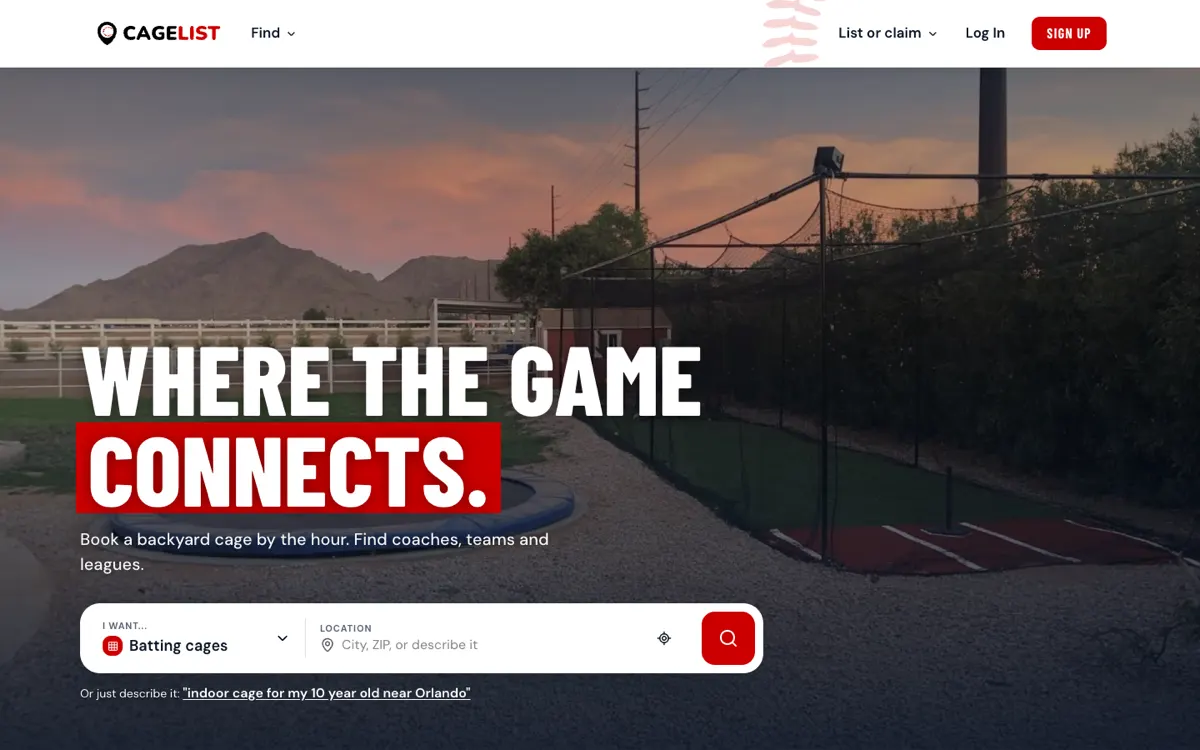
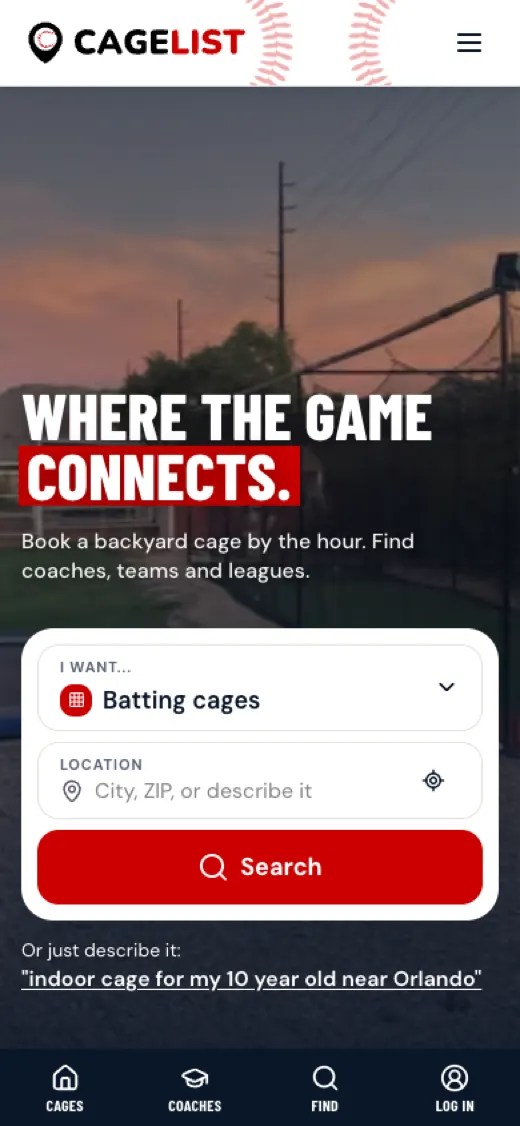
I built CageList, and I still run it.
CageList is a marketplace where players book batting cages by the hour and facility owners get paid. I launched it and handle its bookings, payouts, refunds and disputes myself. Here is what is under it.
- Logins. Players and facility owners each have their own account, with sign-in handled by Supabase.
- Records. A real Postgres database, with row-level security on every table so each person sees only their own data.
- Payments. Players pay on the site and the money moves to the facility owner through Stripe Connect.
- The back end I run. Bookings, payouts, refunds and disputes all run through the system, and I handle them there every day.
How it works
A free 30-minute call
You tell me who is on each side and how they find each other today. I tell you honestly whether a marketplace is the right shape.
A written scope
What it does, who uses it, what it costs and when it ships, for $1,500. If you go ahead, that fee is credited to the build.
A fixed-price build
One price and its own launch date, both written into the scope before the build starts.
It starts with a paid written plan.
Marketplace builds start at $10,000, quoted after the scoping step. It sits under my custom software work, the same way CageList does.
A marketplace is the hardest kind of site to get going.
Building it is the easy half. A marketplace needs people on both sides, and that takes effort after launch that no software does for you. If you can already name the first ten providers, a marketplace is worth it. If you cannot, a simpler site may serve you better first.
You deal with me, start to finish.
No account managers and no hand-offs. One person from scoping to support.